


The woodcut printmaking technique
Introduction
Woodcut is a relief printmaking technique in which an image is carved into a block of wood, inked on the raised surface, and transferred onto paper through pressure. It is one of the oldest printing techniques and played a fundamental role in the historical dissemination of images and texts.
Its visual strength comes from the strong contrasts, the visible marks of carving, and the natural textures of the wood. For these reasons, woodcut remains a highly valued technique in contemporary graphic art.
Origins and history
The origins of woodcut can be traced to China around the 6th century, where it was used to print texts and images on paper and textiles. The technique later developed significantly in Japan, especially through the famous ukiyo-e prints.
In Europe, woodcut began spreading in the late Middle Ages and was widely used for religious images, playing cards and book illustrations. Although other printmaking techniques later became dominant, woodcut maintained its artistic importance and experienced a revival in the nineteenth and twentieth centuries.
Materials and tools
Woodcuts are typically made on blocks of wood such as lime, cherry, pear, boxwood or plywood. The carving is done with gouges and knives, the inking with a roller, and the printing on suitable printmaking papers. Depending on the tradition and the type of work, printing can be done either with a press or by hand.
Printing process
- Design: the image is drawn on the wood block, remembering that it will print in reverse.
- Carving: areas that should remain white are removed from the block.
- Inking: ink is applied to the raised surfaces using a roller.
- Printing: paper is placed over the block and pressure is applied manually or with a press.
- Edition: multiple prints can be produced from the same block.
Types of woodcut
There are two main types depending on the orientation of the wood: plank woodcut (along the grain) and end-grain wood engraving.
Plank woodcut (along the grain)
In this method the block is cut following the natural direction of the wood grain. It is the traditional form of woodcut and usually produces expressive images with visible grain patterns and strong contrasts.
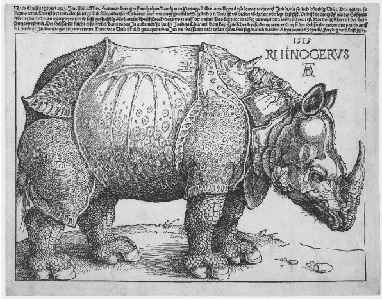
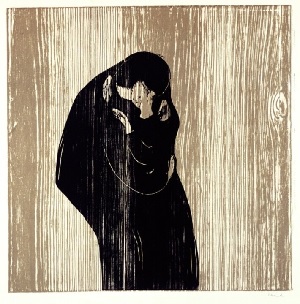
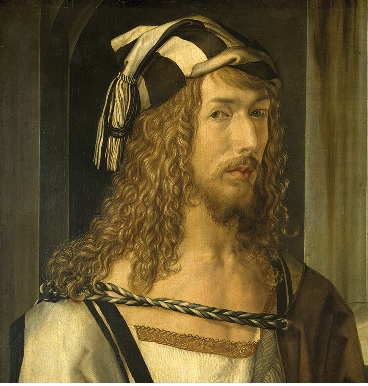
Important artists include Albrecht Dürer, Paul Gauguin, Edvard Munch and Ernst Ludwig Kirchner.
End-grain wood engraving
End-grain engraving, often called wood engraving, is made on the cross-section of the trunk, cut perpendicular to the grain. Hard woods such as boxwood are commonly used and the technique allows a much higher level of detail.
The burin is often used for carving. This method was widely used for book and newspaper illustration before the advent of photography. Notable artists include Thomas Bewick, Gustave Doré, Eric Gill and Barry Moser.
Artistic importance
Woodcut has been not only a method of reproduction but also an artistic language in its own right. Its combination of visual synthesis, expressive power and craftsmanship has ensured its survival from traditional printmaking to contemporary graphic art.
Bibliography
- Ivins, William M. Prints and Visual Communication. MIT Press, 1969.
- Griffiths, Antony. Prints and Printmaking. University of California Press, 1996.
- Gascoigne, Bamber. How to Identify Prints. Thames & Hudson, 2004.
- Hayter, Stanley William. New Ways of Gravure. Oxford University Press, 1966.
- Ross, John; Romano, Clare; Ross, Tim. The Complete Printmaker. Free Press, 1990.
- Parshall, Peter; Schoch, Rainer. Origins of European Printmaking. Yale University Press, 2005.