


The drypoint engraving technique
Introduction
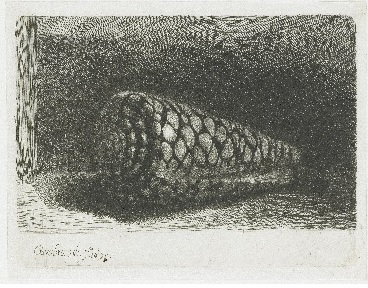
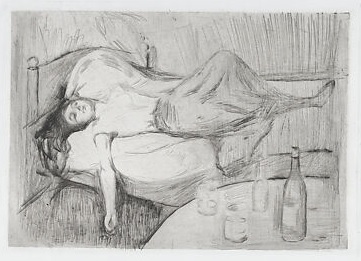
Drypoint is an intaglio printmaking technique in which the artist incises directly into a plate, usually made of copper, zinc or plastic, using a very sharp tool. Unlike etching, no acids are involved: the image is drawn directly onto the surface of the plate.
Its most distinctive feature is the appearance of soft, velvety lines produced by the burr that rises on both sides of the incision. This burr retains ink during printing and gives the image an expressive quality very close to drawing.
Origin and history
Drypoint began to be used in Europe in the late fifteenth century, within the development of Renaissance intaglio printmaking. At first it was employed as a complementary technique alongside burin engraving or etching, but it soon stood out for the sensitivity and freedom of its line.
During the seventeenth century it gained great importance thanks to artists who explored its expressive possibilities. Over time, the technique established itself as an artistic medium in its own right, especially appreciated for the intensity of its lines and its closeness to hand drawing.
In the nineteenth and twentieth centuries it regained prominence among many printmakers, who valued its spontaneity and its ability to convey emotional nuances with great immediacy.
Materials and tools
To make a drypoint print, a plate is used, generally of copper or zinc, although plastic materials such as acrylic can also be employed. The drawing is made with a drypoint needle of steel, diamond or carbide. In addition, intaglio ink, tarlatan or gauze to wipe off the excess, dampened printmaking paper, and an etching press are needed to produce the final print.
Process
First, the plate is carefully polished and cleaned. Then the artist draws directly onto it with the drypoint needle, creating an incised line and a burr that will be essential to the visual result. Next, the plate is inked and its surface is wiped so that the ink remains only in the lines and in the burr. Finally, it is printed on an etching press onto damp paper, which picks up the ink as it is pressed into the incisions.
Characteristics of drypoint
Drypoint has several features that distinguish it from other printmaking techniques:
- It produces soft, velvety lines.
- It offers great expressiveness of line.
- It retains an appearance very close to drawing.
- It results in limited editions because of the gradual wear of the burr.
- It is a direct process, with no use of acids.
These qualities make drypoint a highly valued technique for its ability to preserve the artist’s gesture and translate it to paper with great sensitivity.
Featured artists
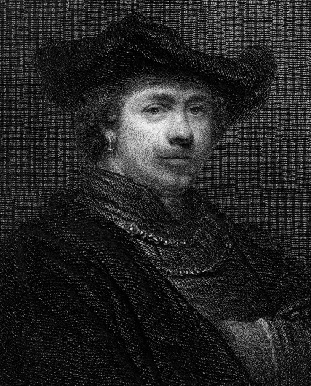
Among the artists who used drypoint are Rembrandt van Rijn, who combined it with etching to achieve great tonal richness; Mary Cassatt, who used it in intimate domestic scenes; Pablo Picasso, always interested in the experimental possibilities of printmaking; and Käthe Kollwitz, whose prints display an emotional intensity especially suited to this technique.
Conclusion
Drypoint occupies an important place in the history of artistic printmaking because of its immediacy, expressive richness and distinctive line quality. Through a relatively direct technical process, it allows for prints of great visual strength and remarkable closeness to the original drawing.
From its Renaissance origins to its presence in modern printmaking, this technique has been valued by artists and art historians as a singular medium capable of combining precision, spontaneity and sensitivity.
Bibliography
- Chamberlain, W. (1981). The Thames and Hudson Manual of Etching and Engraving. London: Thames & Hudson.
- Gascoigne, B. (2004). How to Identify Prints. London: Thames & Hudson.
- Griffiths, A. (1996). Prints and Printmaking: An Introduction to the History and Techniques. London: British Museum Press.
- Ivins, W. M. (1969). Prints and Visual Communication. Cambridge: MIT Press.
- Ross, J., Romano, C. & Ross, T. (1991). The Complete Printmaker. New York: Free Press.