


The aquatint printmaking technique
Introduction
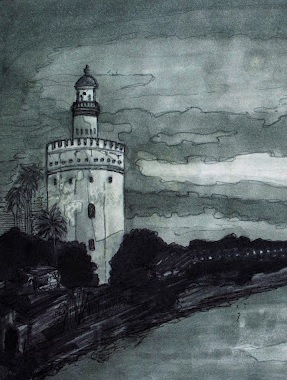
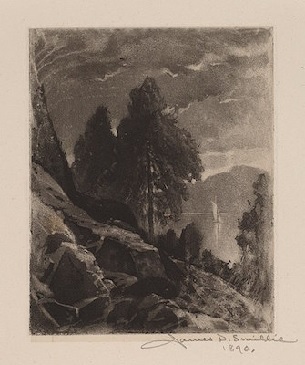
Aquatint is an intaglio printmaking technique that makes it possible to obtain tones and gradations similar to watercolour or diluted ink. Unlike etching, which is mainly based on line, aquatint works with tonal surfaces and is especially useful for creating shadows, atmospheres and contrasts.
Its development decisively expanded the expressive possibilities of printmaking and made it a fundamental technique within artistic print production.
Origin and history
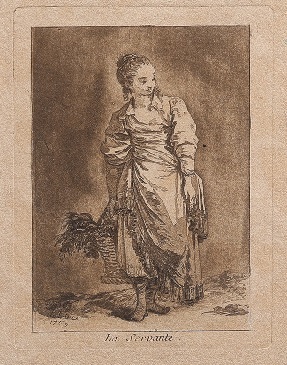
Aquatint emerged in Europe in the mid-18th century and is usually associated with the French printmaker Jean-Baptiste Le Prince, who perfected a method for obtaining tonal effects using powdered resin and acid on metal plates.
Its great artistic development came with Francisco de Goya, who combined etching and aquatint in series such as Los Caprichos, Los Desastres de la Guerra and La Tauromaquia. Thanks to that combination, he achieved images of great dramatic force, rich in light, shadow and atmosphere.
In the 19th century, artists such as Degas and Mary Cassatt also explored its possibilities, consolidating aquatint as a technique of great pictorial value.
Materials and tools
To make an aquatint print, artists normally use a copper or zinc plate, powdered resin, a heat source to fix it, an acid mordant, stopping-out varnishes, intaglio ink, cotton paper and a printing press. Each of these elements plays a role in creating the tonal areas that characterise the technique.
Process
First, the plate is cleaned and degreased. Resin is then dusted over its surface and heat is applied to fix it. The plate is immersed in acid, which bites the metal in the spaces between the resin grains and creates a texture capable of holding ink.
To obtain different tones, the artist successively protects certain areas with varnish and repeats the acid baths. The more exposed areas are bitten more deeply and, when printed, appear darker. Finally, the plate is cleaned, inked and printed onto damp paper.
Characteristics of aquatint
Aquatint is distinguished by several visual and technical qualities:
- It allows smooth tonal gradations.
- It is ideal for creating shadows, atmospheres and backgrounds.
- It produces a characteristic grainy texture.
- It is often combined with etching, drypoint or burin.
- It brings printmaking closer to the language of painting.
Artistic importance
Aquatint represented a decisive innovation in the history of printmaking because it made it possible to move beyond linear drawing and explore complex tonal values. For this reason, it is still taught in Fine Arts faculties and specialised workshops, and it remains a valued technique in contemporary printmaking.
Conclusion
Aquatint is one of the most expressive techniques in intaglio printmaking. Its ability to build tones, contrasts and atmospheres makes it a procedure especially close to painting. From the 18th century to the present day, it has maintained its historical and artistic relevance, with Goya as one of its great masters.
Bibliography
- Chamberlain, Walter. The Thames and Hudson Manual of Etching and Engraving. London: Thames & Hudson, 1985.
- Gascoigne, Bamber. How to Identify Prints. London: Thames & Hudson, 2004.
- Griffiths, Antony. Prints and Printmaking: An Introduction to the History and Techniques. Berkeley: University of California Press, 1996.
- Hughes, Robert. Goya. New York: Alfred A. Knopf, 2003.
- Ivins, William M. Prints and Visual Communication. Cambridge: MIT Press, 1969.
- Saff, Donald and Sacilotto, Deli. Printmaking: History and Process. New York: Holt, Rinehart and Winston, 1978.
- Tomlinson, Janis A. Goya: Order and Disorder. Boston: Museum of Fine Arts, 2014.